Custom guitars
Built around the player.
Electric guitars built one at a time in San Clemente, shaped to the hands and the sound of the person who'll play them.
Hand shaped necks
Carved to your hand from the profile up, then fretted and set up here so it plays right on day one.
Custom electronics
Pickups, switching, and wiring chosen for the sound you're after, laid out cleanly and shielded properly.
One-off finishes
Oil, lacquer, or something no one has asked for yet. Every finish is done by hand and never repeated.
The instruments
T-style
Walnut X-Stripe T-Style
A walnut body crossed by two maple stripes, a maple neck with a split walnut-and-maple headstock, and gold hardware with engraved bridge and control plates.
- Material
- Walnut & maple
- Detail
- Maple X-stripes
- Body style
- T-style
T-style
Mahogany T-Style
A ribbon-grained mahogany body under a brushed-gold pickguard, with engraved gold plates, gold frets, pearl dots, and copper-shielded cavities.
- Material
- Mahogany
- Detail
- Copper-shielded
- Body style
- T-style
- When
- Spring 2026
T-style
Walnut Amber T-Style
A walnut body and walnut fretboard on a maple headstock, dressed in an amber pearloid pickguard and gold hardware.
- Material
- Walnut
- Detail
- Amber pearloid guard
- Body style
- T-style
Body styles
What the shape does.
Pickups do most of the talking. The body decides the weight on your shoulder, where it balances, how it sits in a chair, and how long a note hangs. Here's the honest version of each.
T-style
A slab single-cut with no contours, the simplest body there is. Light to middling weight, balances well, and with the bridge pickup on a steel plate it has a bite nothing else quite has. For players who want one sound done right.
Ask about oneS-style
Double cutaway with a belly cut and forearm contour, so it disappears against you. Light, reaches the top frets easily, and the trem adds a dimension. The most comfortable solid body for long nights.
Ask about oneOffset
The waist sits askew so the guitar hangs level on a strap and lies flat on your knee. Usually a little larger than an S-style, with a looser, airier feel. For players who sit and stand in equal measure.
Ask about oneSingle-cut
A thicker body, often with a carved top, and the neck set in rather than bolted. Heavier, with the long sustain and thick midrange that weight and construction give you. Chambering takes a pound or two off without losing the character.
Ask about oneDouble-cut
The single-cut's lighter sibling: the same set-neck construction in a thinner body with two horns. Fast to the top frets, lighter on the shoulder, slightly less sustain. Trades a little weight for a lot of comfort.
Ask about oneSemi-hollow
A solid centre block with hollow wings and an f-hole or two. Lighter than a solid body the same size, warmer and more open, with a touch less sustain and a hint of feedback at volume. For jazz, blues, and anyone who likes a guitar that breathes.
Ask about oneAnatomy of a build
From first conversationto final chord.
Four stages, one pair of hands, and a lead time we'll hold to. Here's how a guitar comes together.
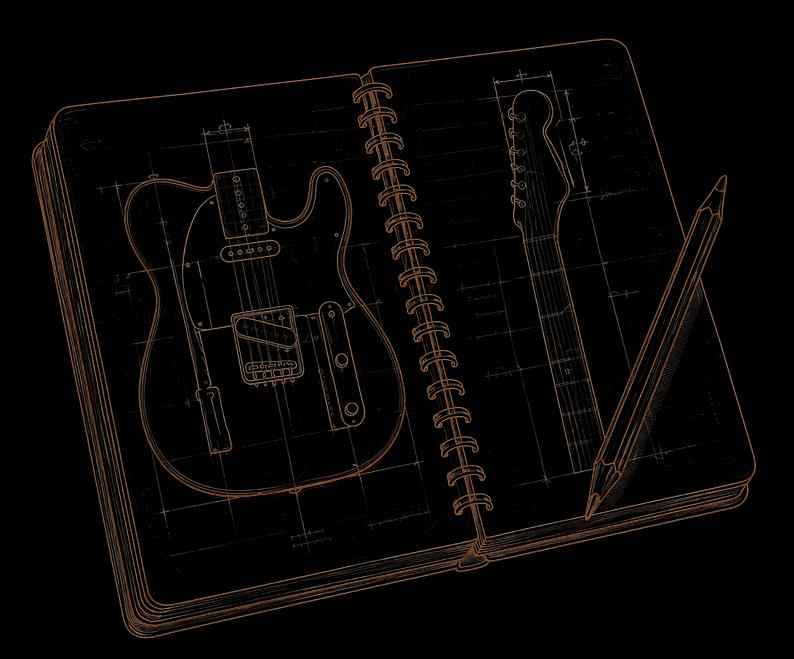
Consult
We start with how you play and what you're chasing: feel, weight, sound, the details you've never found on a rack. Sketches follow, then a build sheet you sign off.
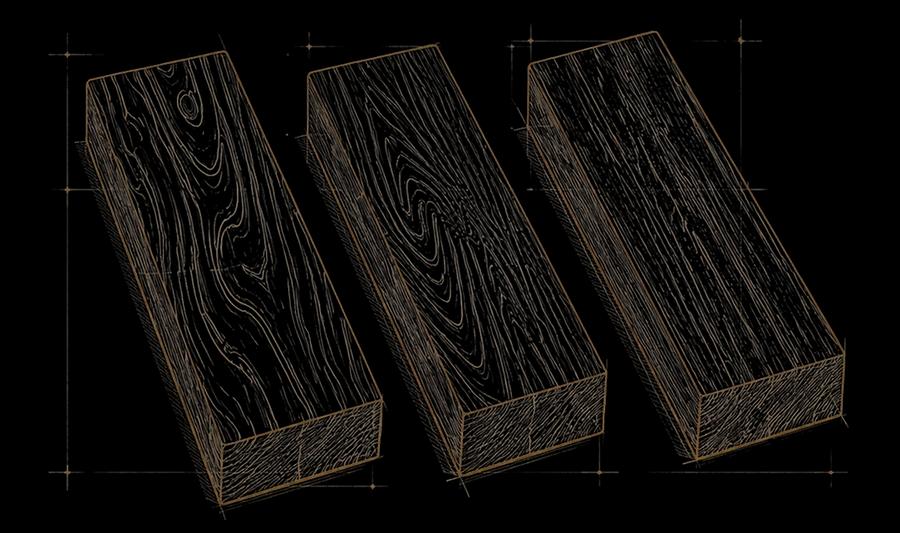
Wood selection
Blanks are chosen for the instrument, not the pile: weight, grain, and tap tone, matched to the body style and the finish you've picked.
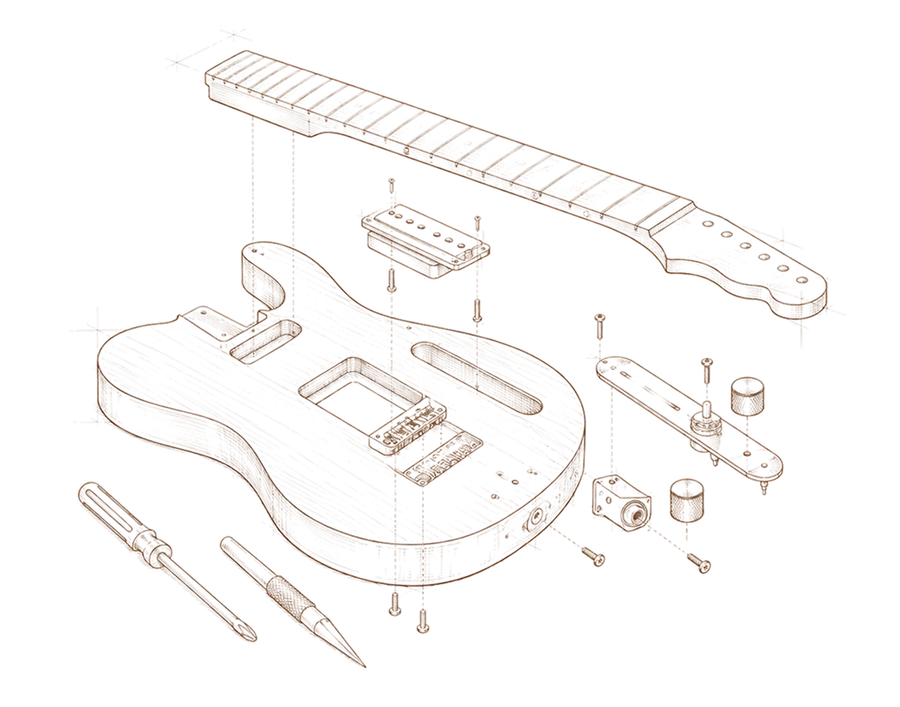
Build
Body and neck are cut, carved, and fitted by hand. Frets go in, hardware is test-fit, and the whole thing is dry-assembled before finish touches it.
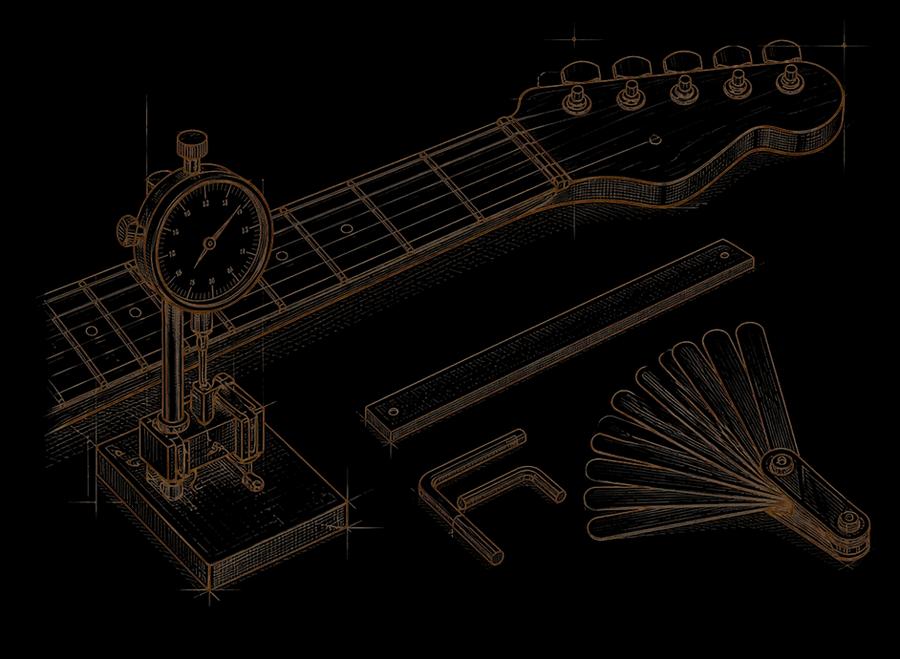
Setup
Neck relief, action, nut slots, and intonation are dialled in over a few days, then played, then dialled in again. It leaves when it's right.
Lead time: 6–8 weeks
Have a guitar in mind?
Tell us what you have in mind and we'll talk through materials, timing, and what it would take to build it right.
Start a commission- Custom guitars
- Van interiors
- Furniture
- Cabinetry